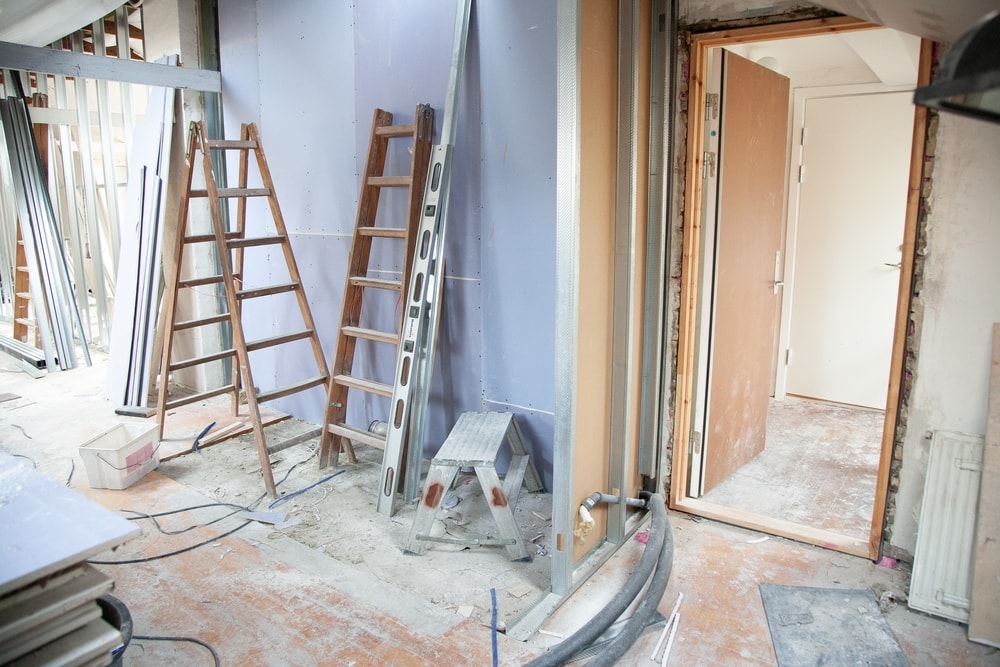
Remodeler’s 7 Steps to Redoing Popcorn Ceilings
For remodelers, removing popcorn or acoustic ceiling can be one of the most daunting tasks in a room. Even the shows on HGTV and other networks seldom tackle this task. It rates somewhere south of wall paper removal in most people’s minds.
My wife and I purchased the house we live in now knowing that we would have to tackle this onerous project in all the rooms of our 2 story home.
So we did a little research, talked to some local professionals and got to work.
First off you should know what you’re dealing with. Acoustic or popcorn ceiling is sprayed on during the drywall process and consists of drywall compound and small bits of Styrofoam. If you are fortunate it has not been painted over. If it has the work will be more difficult. You can test a small section in a corner of the room using the techniques listed below, go to step #7 and find out how to test. Do only a square foot or less and remember even this small section will make a considerable mess.
Side Note: If you are looking for a professional Granite Countertops then check out RG stone granite countertops.
Be aware the process is messy, dusty, and time consuming. Yet for all that it is doable by a pair of 50 year olds. With the exception of our living room which is vaulted and has a height of over 17ft, we did all the ceilings in our home. For this we had a drywall professional bring in scaffolding and a helper and do the living room. In addition we used this same person for retexturing and the combination of DIY and professional help worked out great and was inexpensive.
Since we are dealing with the ceiling; it makes since to do it first in a room. Here are the steps and techniques we used to remove the old popcorn ceilings.
1. Remove all furniture, window coverings, rugs, etc.
2. Mask off windows and doors (with the exception of the door used to gain access to the room and any closet doors which you want to take off the hinges and take out of the room. (now’s the time for the clothes to go as well)
3. Take down or mask off ceiling fans, light fixtures and anything else that hangs from the ceiling
4. If you haven’t done it by now get everything removable off the walls, pictures, tapestries, EVERYTHING!
5. If you are not changing out the rug or redoing you’re floors you will need to cover them completely with a good heavy duty plastic tarp sealed tightly at the baseboards.
6. Get your tools together….
7. You have arrived at the point of no return. From here on out you must either finish it, have someone else do it or live with a screwed up ceiling!
All right. Go to the farthest corner from the door and position a ladder a couple of feet back from the corner. Walk up and check out that you can reach into the corner with the drywall knife up against the joint between the ceiling and the wall.
OK, now take your sprayer and wet down a section in the corner about 2 ft by 2ft, no bigger; smaller if you want the first time. Let the water soak the popcorn ceiling a ½ minute or so. Then from the farthest point from the corner towards the corner angle the drywall knife and scrape the popcorn ceiling off onto the floor. It will take you a while to learn the correct angle, pressure and technique, but take heart, you will get it.
My wife did the majority of ours, especially in small rooms like the bathrooms and closets. (Yes, that’s right; if you’re going to do it you have to do the closets too!)
Be careful of one thing, you do not want to take up the joint tape from the ceiling or gouge holes in the sheetrock. Any of this you do will have to be repaired and resanded, which is time consuming and more messy than what you’re already into.
So if you’ve got the first bit off you want to make sure you don’t leave any loose drywall on the ceiling. This will fall off when it’s re-textured or painted, ruining the look of all your hard work.
After you complete scraping the room you need to cleanup the mess and vacuum all the stuff up or fold up your tarp and take it out. Whatever works here for you. You’re still going to come back and sand the ceiling with a pole sander and 120 grit or higher sand paper, then wipe down the ceiling with a damp cloth. This should make it ready for patch, re-texture and paint.
In our master suite we did smooth wall which requires the most effort and skill. So we brought in a drywall guy to do the actual texture and we did all the grunt work of sanding and cleaning up. It worked out great. He told us how to prepare and sand, we followed his directions, had the room ready when he showed up and got off with very reasonable charges for his very professional looking work.
On the rest of the house we did something less difficult and less expensive and still had him texture all the ceilings. According to what part of the country you live in there are different styles and textures used and available. If you do as we did and have someone do the texturing he will be able to give you examples and more importantly samples of these texture styles.
After we chose the one we wanted it worked like this. We removed the old popcorn ceilings, but did almost no sanding. We just made sure there was no loose drywall compound left on the ceiling. This eliminated the need for the double cleanup required if you sand. With the room ready, the drywall guy came and did his thing. We let it dry overnight and painted the day after. Worked out great and again the price was very reasonable.
Now if you are skilled or willing to take on the texturing, you can eliminate any outside help at all, just be willing to live with whatever result you create on the finished product.
For us this was long term process, because we were completely redoing each room. In addition we were living in the house while remodeling and that’s always a trial. Never the less we were able to remove those nasty, dirty, dusty, popcorn ceilings and now have freshly painted, clean, up to date ceilings that make this remodeled home fresh and bright.
If we can do it, so can you. Good luck and good remodeling!